
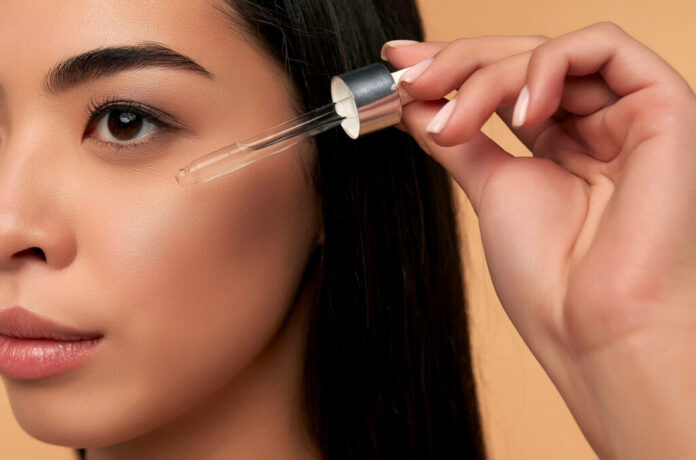
Beauty marketing has become very good at sounding scientific. A serum does not just moisturize anymore, it “visibly transforms,” “repairs,” “resets,” or “targets signs of aging.” Some of that language can be fair, and some of it is just clever packaging around a normal result.
The tricky part is that shoppers now see beauty claims everywhere: product pages, sponsored clips, review roundups, before-and-after photos, and AI-written explainers.
Before you believe the result, slow down and ask what the claim is actually proving.
Start With The Exact Promise Being Made
“Reduces wrinkles” feels stronger than “reduces the appearance of wrinkles,” and that difference matters.
The FDA explains that cosmetic labeling claims must be truthful and not misleading, and products that claim to treat disease or affect the body’s structure or function may be treated as drugs, not simple cosmetics.
That is why brands use softer language, like skin “looks smoother,” “feels firmer,” or “appears brighter.” Those phrases are not useless, but they are not the same as proving a biological change. Read the sentence like a contract, not a slogan.
Look For Evidence Behind The Wording
Every phrase is polished to reduce doubt, and AI tools can make even thin claims sound calm, friendly, and expert. That is why brands using automation should still humanize AI content carefully, because natural wording should clarify evidence, not decorate it.
Before trusting cosmetic claims, check whether the proof matches the promise:
- Was the finished product tested, or only one ingredient?
- Were results measured by instruments, experts, users, or photos?
- How many people were involved?
- Does the time frame sound realistic?
- Is the method explained anywhere?
If the claim is big but the evidence is hidden, that is not proof. It is marketing asking for trust before earning it.
Clinical Testing Is Not The Same As User Opinion
Many skincare claims sound clinical, but not all evidence carries the same weight. A consumer perception test may ask people whether their skin “felt softer” after use. That can be helpful, but it is different from measuring hydration, pigmentation, or wrinkle depth with controlled tools.
The European Commission’s technical document on cosmetic claims says evidence may include experimental studies, consumer perception tests, published information, or a mix, but studies should use reliable, reproducible methods and scientifically valid methodology.
| Claim style | What it usually means | What to check |
| “90% agreed” | User perception | Sample size and question wording |
| “Clinically tested” | Some formal test occurred | Method, duration, and controls |
| “Dermatologist tested” | A dermatologist was involved | What was actually evaluated |
The label is only the start. The method tells the story.
Before-And-After Photos Need Context
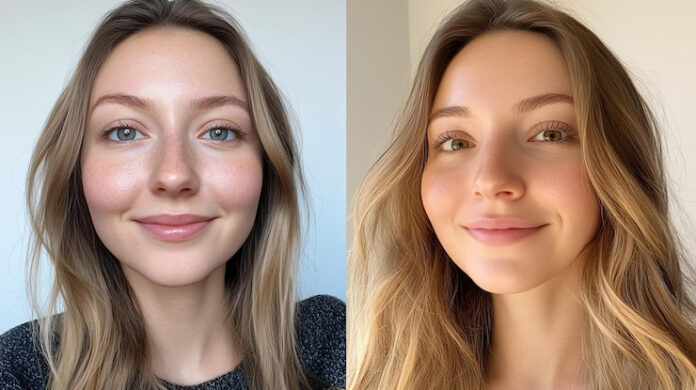
Before-and-after images can help, but they are also easy to influence without obvious editing.
A small change in lighting, camera angle, moisturizer, makeup, facial expression, or distance can make skin look smoother. That does not mean every photo is fake, but it should not carry the whole argument.
A trustworthy visual result usually feels boring in the best way. The background is similar, the face angle is consistent, the lighting is controlled, and the time frame is clear.
If the “after” image has softer light, glossier skin, a different pose, and no explanation of product use, be careful.
Important check: a visual result should support claim substantiation, not replace it.
Good evidence does not need a cinematic glow-up.
Ingredient Claims Can Sound Smarter Than They Are
Ingredient-led marketing is powerful because it feels specific. Niacinamide, retinol, peptides, ceramides, vitamin C, and acids all have real cosmetic value in the right formulas.
But an ingredient name alone does not prove the product will deliver the promised result. Concentration, stability, packaging, pH, supporting ingredients, and usage instructions all matter.
A product can contain a trendy ingredient and still perform weakly if the formula does not support it. A quieter formula can work better because it is stable, balanced, and tested properly. So do not judge by the hero ingredient alone.
Ask whether the brand explains the form used, the concentration range, the routine fit, and the expected timeline. Beauty results usually depend on formulation, not ingredient fame.
Reviews And Influencer Claims Need Pattern Reading
Reviews are useful, but they need the same skepticism as product claims. The FTC’s business guidance on endorsements, influencers, and reviews highlights honest opinions, clear disclosures, and reviews that reflect genuine customer feedback.
For beauty products, that matters because skin type, climate, routine, and expectations can change the result completely.
Look for feedback that sounds specific and lived-in:
- “It pilled under sunscreen”
- “It helped dryness but not dark spots”
- “The fragrance was too strong”
- “I saw results after six weeks, not one”
Overly polished reviews that repeat the same phrases can feel manufactured. Real feedback usually has mixed texture. People mention what worked, what did not, and who the product may suit better.
Use A Simple Trust Filter Before Buying
A claim does not need to be boring to be believable. It just needs to be clear, proportionate, and backed by the right proof.
In the United States, the FDA says cosmetic products and ingredients generally do not need premarket approval, except for color additives, but companies are responsible for product safety and proper labeling.
Did you know? In the EU, Commission Regulation No 655/2013 lays down common criteria for cosmetic claims, including legal compliance, truthfulness, evidential support, honesty, fairness, and informed decision-making.
Use this quick filter before buying:
- Clear claim
- Matching evidence
- Realistic timeline
- Transparent review signals
If all four are missing, keep your wallet closed.
FAQs
These extra questions usually come up after the basic claim checks are done.
At the end
Beauty claims are not automatically fake, but they are often dressed to impress. The smartest approach is not cynicism, it is calm checking. Look at the promise, the proof, the photos, the review pattern, and the regulatory context.
If the claim is honest, the evidence should make it easier to understand, not harder. And if the result sounds instant, universal, and effortless, that is usually your cue to slow down.
Marketing can persuade, but evidence should persuade more.


