

Becoming a private bodyguard usually comes down to four things: meet your state’s licensing requirements for security work, get real protective-operations training, build a track record for reliability and discretion, and specialize from there. You don’t need a military or law-enforcement background — but you do need legitimate training and the professionalism clients actually hire for. The image of the job is mostly muscle; the reality is mostly preparation and judgment.
Here’s the realistic path, and what to watch out for along the way.
Step 1: Understand what the job really is

Private protection is a planning discipline far more than a physical one. The day-to-day leans on advance work, travel and route logistics, residential routines, emergency awareness, coordination with staff, and calm communication.
The U.S. Bureau of Labor Statistics’ security guard occupational profile describes the entry-level duties most security careers start with — monitoring, access control, emergency response, reporting — and protective work builds a wider, more deliberate skill set on top of that foundation.
That reframe matters, because people who chase the dramatic version of the job tend to wash out.
The professionals who last treat it as a craft: heading off avoidable problems while treating the client, the public, and partner teams with respect.
Step 2: Meet the legal requirements
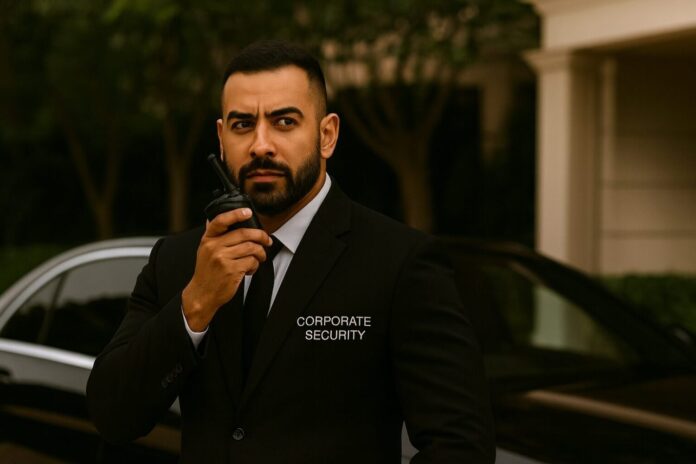
Most security work requires state licensing or registration, and some roles add permits on top. Requirements vary by state, so confirm yours before you spend money on training.
Licensing is the legal floor — it lets you work, but it isn’t the same as being prepared for protective work. Treat it as the first box to check, not the finish line.
Step 3: Get real protective training
This is where most of the difference is made. Look for training that teaches the full operating picture — protective operations and advance work, secure transportation, communication and report writing, and emergency or tactical medicine — through supervised, scenario-based practice rather than lecture alone. Academy-style programs that run several weeks tend to reflect the real demands of the work; very short “certifications” rarely do.
If you’re mapping out how to become a private bodyguard, Pacific West Academy’s guide to the field is one example of how a serious program frames protection as a specialized branch of private security — and it pushes prospective students to weigh the work, the skills, and the training before assuming a title tells the whole story. Whichever program you consider, read its curriculum next to your state’s rules and real employer expectations.
Step 4: Build a reputation and specialize

Protective work runs on trust. Employers and clients notice reliability, discretion, and judgment long before they notice a line on a certificate.
Many people enter through foundational security roles and move toward residential, event, corporate, or executive details as they build a record.
Specializing — and being known as dependable — is what opens higher-responsibility work over time.
What a career changer should look for in a program
Before you enroll, weigh three things:
- Transparency. A quality program tells you what it teaches, how much is hands-on, and whether it’s pitched at beginners or people who already hold licenses.
- Credentials versus competence. A certificate can help, but it should sit on top of real practice, good instruction, and a clear sense of what employers expect.
- Honesty about limits. Be wary of any school promising a guaranteed job or income. A credible one explains where its responsibility ends.
Questions people ask about becoming a bodyguard

How long does it take to become a private bodyguard? It depends on your state’s licensing process and the training you choose. Basic licensing can be quick; serious protective training usually runs several weeks. Building the reputation that leads to steady work takes longer still.
Do you need a license to be a bodyguard? In most places, yes — security work requires state licensing or registration, and some roles need additional permits. Confirm the rules for your specific state and the kind of work you want to do.
Can you become a bodyguard without military or police experience? Yes. Many professionals come from civilian backgrounds. Quality training, proper licensing, and professionalism matter far more than a uniform on your résumé.
How much does bodyguard training cost? It ranges widely — from a few hundred dollars for basic licensing to several thousand for a multi-week academy program. The price reflects course length, hands-on hours, and which licenses and certifications are included. Compare what each program actually delivers, not just the sticker price.
The people who make this jump well aren’t the ones with the most dramatic backstory. They research carefully, get legitimate training, meet the legal requirements, and earn a name for being dependable. In a field built on trust, that reputation ends up being the most valuable thing they own.